The injury usually comes out of nowhere.
One week you’re making progress — adding reps, feeling strong. The next, there’s a persistent ache in your elbow. Then your shoulder starts clicking. Then you’re sitting out entirely, wondering what went wrong.
The truth is, nothing came out of nowhere. The damage was accumulating quietly for months — through small compromises in form, through movements your joints weren’t designed for, through the simple act of copying what the strongest person in the room was doing.
After years of researching movement science and working as a kinesiologist, Jeremy Ethier identified five patterns that cause the vast majority of preventable gym injuries. None of them are complicated. All of them are fixable. Here’s what they are — and more importantly, what to do instead.
Fix 1: Stop Copying Other People’s Form. Learn Your Own Anatomy.
Here’s something most coaches won’t say: there is no single correct squat form that works for everyone.
Your bone length, your joint mobility, and even the shape of your hip sockets all determine what your proper form looks like. Two people squatting with perfect technique for their bodies can look completely different from each other.
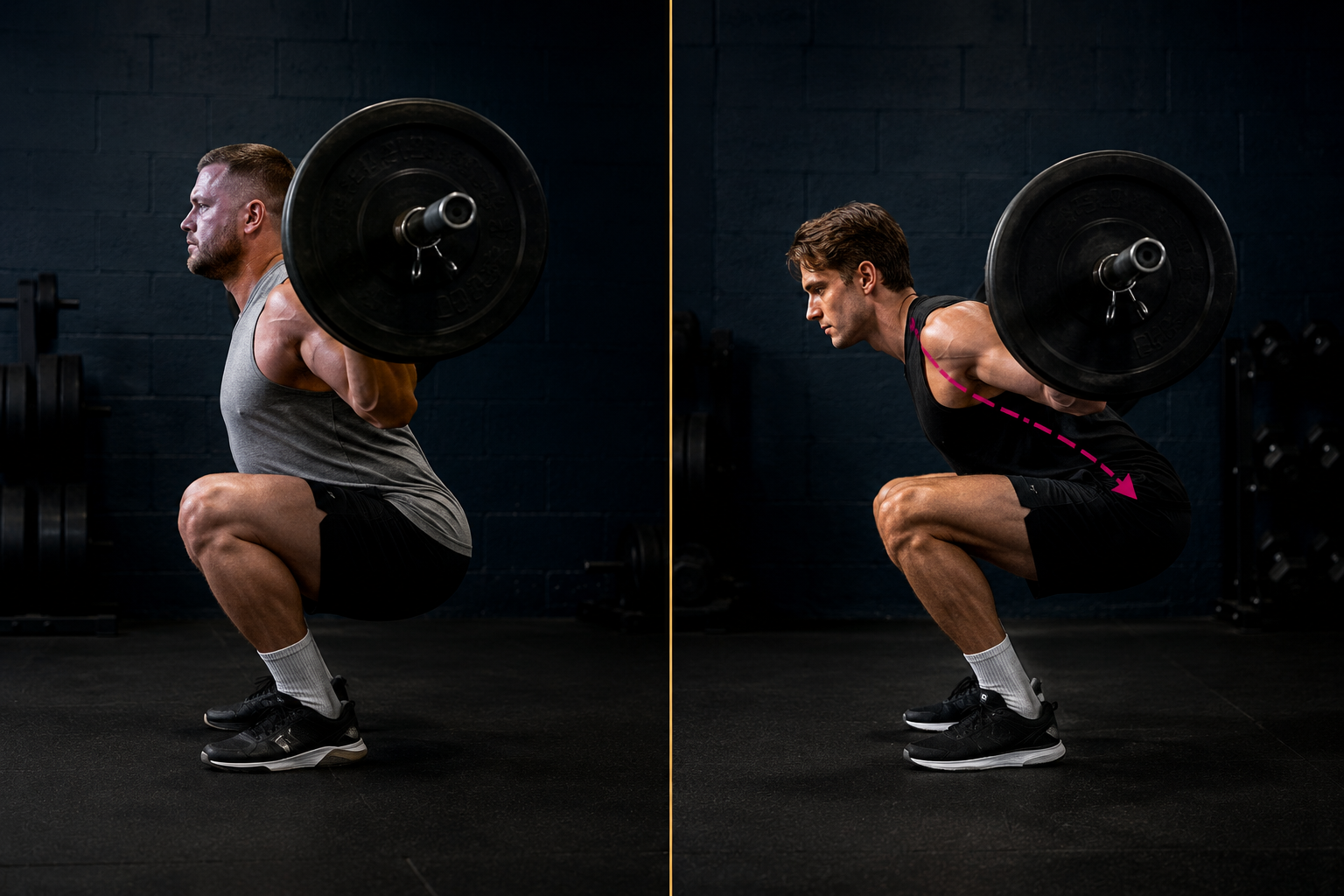
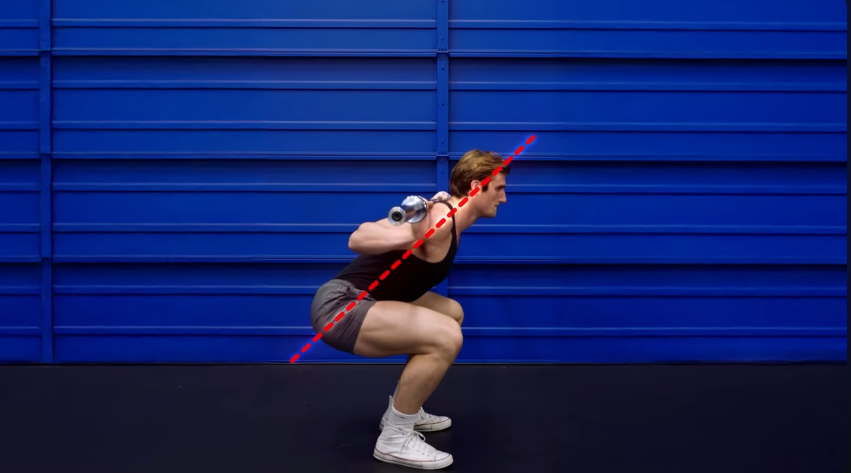
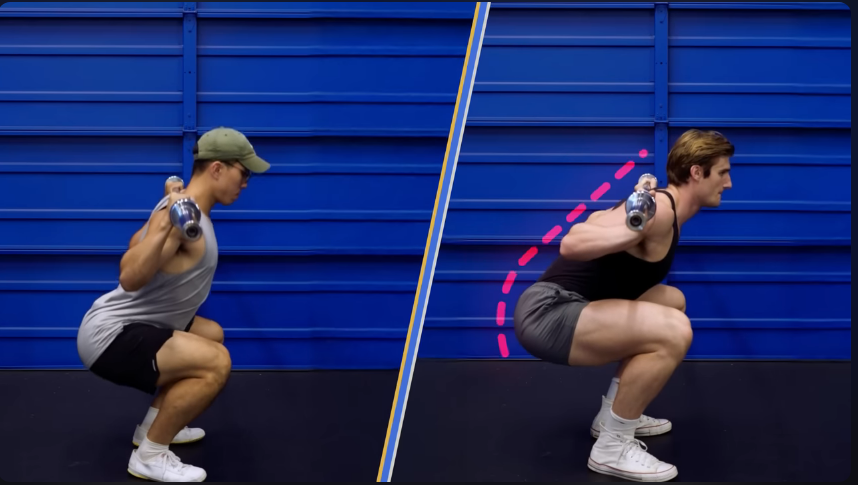
Take two real examples. Max has long femurs and tight ankles. When he squats, his torso leans significantly forward — not because of laziness or weakness, but because of geometry. Forcing him to squat upright would cost him his balance and strain his lower back. Contrast that with Alex, who has short femurs and excellent ankle mobility. He can squat deep while staying nearly vertical. Both are training correctly. Neither should copy the other.
The same logic applies to foot placement. A narrow, toes-forward stance works well for some hip structures and creates painful pinching in others. Rather than defaulting to whatever your gym’s strongest lifter is doing, test these three stances and find your own:
- Narrow, toes forward — works for some hip structures, restricts depth for many others
- Slightly wider, toes angled out 15–30° — the sweet spot for most people
- Wide stance, toes further out — deepest hip opening, but limits squat depth
Deadlifts follow the same principle. Shorter arms make the conventional pull a back-rounding challenge. If you can’t reach the floor without your lower back rounding, try elevating the bar on plates, or switch to sumo.
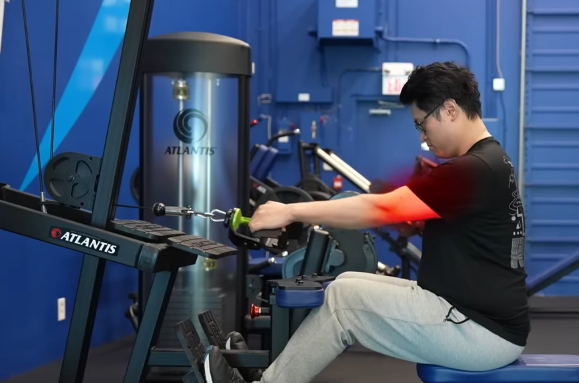
Machines aren’t exempt either. On leg extensions and leg curls, the machine’s pivot point needs to align with your knee — there’s usually a sticker marking it. On chest press machines, the handles should sit at nipple height. Too high and your elbows flare, loading the shoulder joint at an angle it wasn’t designed for. These are thirty-second adjustments that remove thousands of reps of unnecessary stress over the course of a year.
Fix 2: Your Mid-Back Is Holding Your Shoulders Together. Start Training It Like It Is.
When shoulder pain comes up, the immediate reaction is always the rotator cuff. And yes — the rotator cuff matters. But it’s rarely the whole story.
Your scapula isn’t attached to your rib cage through any actual joint. It’s suspended entirely by muscle, pulled from multiple directions. The traps and rhomboids sit at the top and middle of your back, and because the scapula connects to your humerus, they directly control how your shoulder moves.
If those muscles are weak, your shoulder has no stable platform to press or pull from.
Most people sit for hours a day with shoulders pitched forward, effectively locking the traps and rhomboids in a chronically lengthened, disengaged position. Then they walk into the gym and do rows — but because those muscles are so switched off, the arms do all the work. The forearms pump up. The shoulder keeps deteriorating.
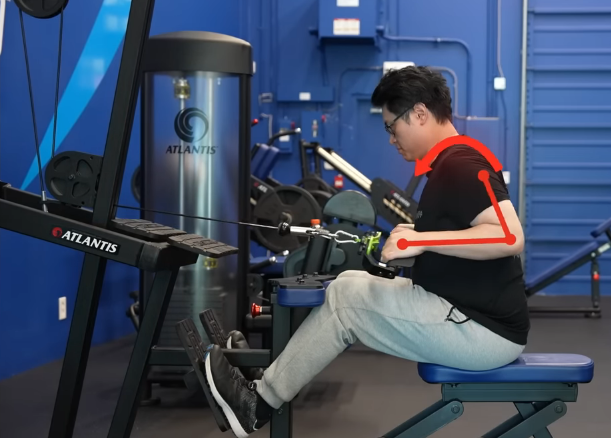
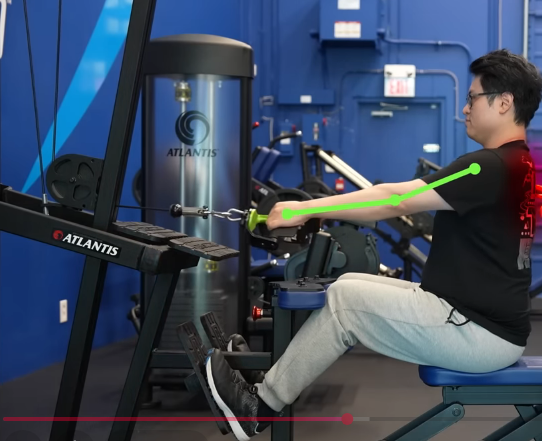
The fix is about relearning how to actually use your back:
- Press your shoulders down before you pull — no shrugging
- Drive with your elbows, not your hands
- Pinch your shoulder blades together at the end of every rep — like you’re trapping a pencil between them
- Let them fully open on the way back
You’ll likely need to drop weight to feel this. That’s normal. You’re rebuilding a movement pattern from scratch.
For pull-ups and pulldowns, your shoulders need to move. Let them rise toward your ears on the way up. On the way down, shove them away from your ears while driving with your elbows. Frozen shoulders throughout the movement means your back is barely involved.
Add three sets of face pulls or prone arm circles at the end of every upper body session. They take five minutes and do more for long-term shoulder health than most people’s entire back programs.
Fix 3: Straight Bars Are Working Against Your Anatomy
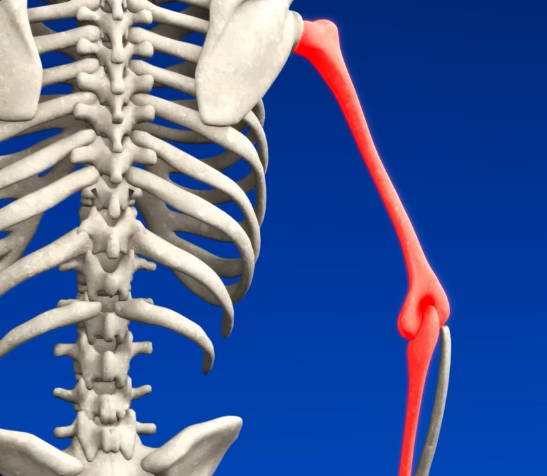
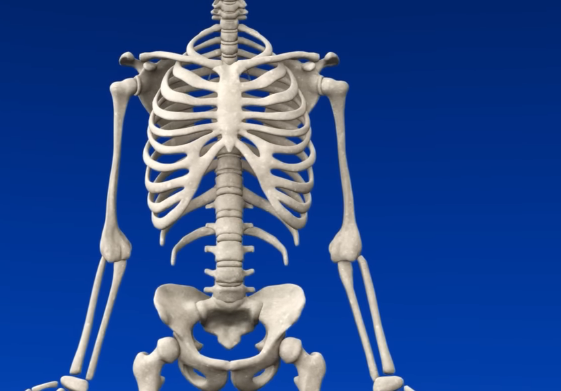
Your arms don’t hang perfectly straight down. They have a natural carrying angle — a slight outward angle at the elbow, created by how the bony point of the ulna locks into a groove in the humerus when you extend the joint. Women tend to have a more pronounced version of this on average.
This matters for every exercise where both hands are locked onto a fixed straight bar.
During a barbell curl, your joints want to follow that natural angle. The bar forces both hands into a perfectly straight, fixed line — loading tendons, ligaments, and wrists through a position they were never meant to hold for thousands of repetitions. The math adds up fast: two sets twice a week is nearly 4,000 reps over a year. The strain starts at the wrist, migrates to the elbow, eventually reaches the shoulder.
Straight bar tricep pushdowns have the same problem. Triceps prefer to extend through an angle, not straight back. The bar forces them through a path that feels manageable at light weights and increasingly rough at heavier ones.
The fix isn’t to eliminate these exercises. A barbell curl isn’t going to immediately injure you. The rule is simpler: for every muscle group, include at least one exercise that lets your elbows and hands freely rotate.
- Chest and shoulders: dumbbell press instead of barbell
- Back: single-arm cable rows or single-arm pulldowns
- Biceps: dumbbell curls or single-arm cable curls
- Triceps: crossbody cable pushdowns
You don’t need to give up the bar. You just need to balance it with free-rotation options.
Fix 4: Strength Is Earned, Not Forced
The most dangerous training mindset isn’t laziness. It’s the conviction that you have to add weight every session, no matter what.
Here’s how that plays out: you push through PRs when your body isn’t ready. Form slips a little. You tell yourself it’s fine. The reps get ugly. Weeks later, something gives — an elbow, a shoulder, a lower back — and you’re forced to stop entirely.
The more accurate model of progress: you challenge your muscles with a given load. If your recovery does its job — sleep, nutrition, stress management — you come back slightly stronger. Then you earn the right to add weight. It’s a consequence of the process, not a demand you place on it.
This matters most on your worst days. A rough night of sleep, a missed meal, high stress — these shift your recovery baseline down. Attempting a PR on those days is how acute injuries happen. One case study: a woman came off a long shift waitressing, underslept and dehydrated, went straight to the gym to beat her squat PR from the week before. Skipped the warm-up, loaded heavier, and ground through ugly reps until she felt a sharp pain in her lower back. Ten years later, the injury still affects her.
Research actually supports the conservative approach. Studies comparing two groups over 12 weeks — one adding reps at the same weight, the other adding weight — found both methods equally effective for muscle growth. If you’re not ready for more weight, aim for one or two more reps instead. Progress is progress.
"You don't force your muscles to grow by lifting heavier. You challenge them — and if your recovery does its job, you come back stronger. Weight increases should be earned, not extracted."
Fix 5: Your Joints Need Variety, Not Just Rest
Even well-designed exercises become problematic when repeated for months without variation. Your joints don’t just accumulate fatigue within sessions — they build up stress from performing the same mechanical pattern over and over, week after week, until something gives.
Every 8–12 weeks, audit your training. Are any exercises starting to feel rough? Is there a persistent ache that only shows up after one specific movement? That’s your signal to rotate it out temporarily. Swap your chest press machine for a dumbbell press. Change your pull-up grip. The exact exercise matters less than giving the joint a break from its usual loading pattern. You can always return to your favourite movement once it’s had time to recover.
Eight-time Mr. Olympia Ronnie Coleman is the cautionary extreme. Training for hours a day, pushing 600-pound squats — his body eventually paid in full. He can barely walk now. Asked if he had any regrets, his only one was that he didn’t get two more deadlift reps on the day his back cracked mid-set.
He kept training anyway.
Most of us aren’t Ronnie Coleman. When your elbow whispers that something’s wrong, listening is the smarter play.
The Short Version
- Squat and deadlift for your own anatomy, not someone else’s. Test three stances. Adjust machines to match your joints.
- Train your mid-back with the same seriousness as your pushing muscles. Traps and rhomboids are your shoulder’s entire support system.
- Balance every straight bar exercise with at least one free-rotation movement per muscle group. Variety in the joint path prevents the stress from compounding.
- Progress is earned, not forced. Adding reps is equally as effective as adding weight. Skip PRs on bad days.
- Rotate exercises every 8–12 weeks so your joints aren’t grinding through the same mechanical path indefinitely.
Joint health isn’t a separate goal from building strength and size. It’s the same goal. The lifters who train the longest are the ones who figured out that protecting the joints is the performance strategy.
Want to understand how your muscles and joints actually work together?
Explore the Muscle Structure Visual Guide →